Wednesday, December 05, 2007

Traffic in Viet Nam

Traffic supplied endless entertainment and amusement in Viet Nam. Apparently the number of motorbikes seen is actually a sign of the great economic progress there. They would have been bicycles 10 years ago.
All vehicles there are equipped with loud horns and are used incessantly. They are used to pass, to alert pedestrians that they won't stop for them, to warn other vehicles that they are near. However, since they are used so often by everybody that I couldn't see that they served any purpose. Car and truck drivers also like to flash their head lights.
The "quiet" here in Bangkok is remarkable

Here are a few views thru the windshield of our drivers:
A group of uniformed school kids as school lets out in the countryside:
A view of an intersection in Hanoi from a rooftop cafe:
It is impossible to exaggerate the importance of the motorbike in Viet Nam. They outnumber cars on the streets by about 15 to 1. But they are used as a form of transport for almost everything. They call them "bikes of burden".

Families:

Sheaves of rattan:

Pots and pans:
Coffins:

Dead pigs carried to market:

I also saw folks driving them with one hand while dialing and talking on their cell phones!

Now I will spend a couple of days in Bangkok before going to the beach resort of Phuket.

To Bangkok

Wednesday late afternoon, 5 December in Bangkok

A few photos from Hue during a hour and a half boat ride around the Perfume River and a side canal. Nothing spectacular aside from the sporadic rain showers patterns on the surface. My first rain of the trip.


Tuesday, December 04, 2007

Hue

Tuesday morning, December 4

Hue was the Vietnamese Imperial capital of the Nguyen Dynasty from 1802 to 1945. It is located in Central Vietnam on the Perfume River and was the focus of severe battles in 1947 during the French War and in 1968 during the American War. Lots of damage was done to the Imperial structures and monuments in those years. A lot of restoration is being attempted, but much work is yet to be accomplished.

The Citadel contains the former Imperial headquarters, living and working areas as well as temples. There are now also museums there.

The various Emperors each constructed elaborate Tombs out in the surrounding countryside. They served as vacation homes for each emperor as well has honoring them for immortality.
We visited 3 tombs.

A gate within the Citadel:

A building in the Forbidden Purple City within the Citadel:

These photos were taken at the Tu Duc Tomb Site built in the 1840s. The grounds are beautifully landscaped:


The Khai Dinh Tomb site was built in the 1920's by an emperor who traveled often to Europe and incorporated Asian and European elements in his tomb.

This is his elaborately decorated throne:
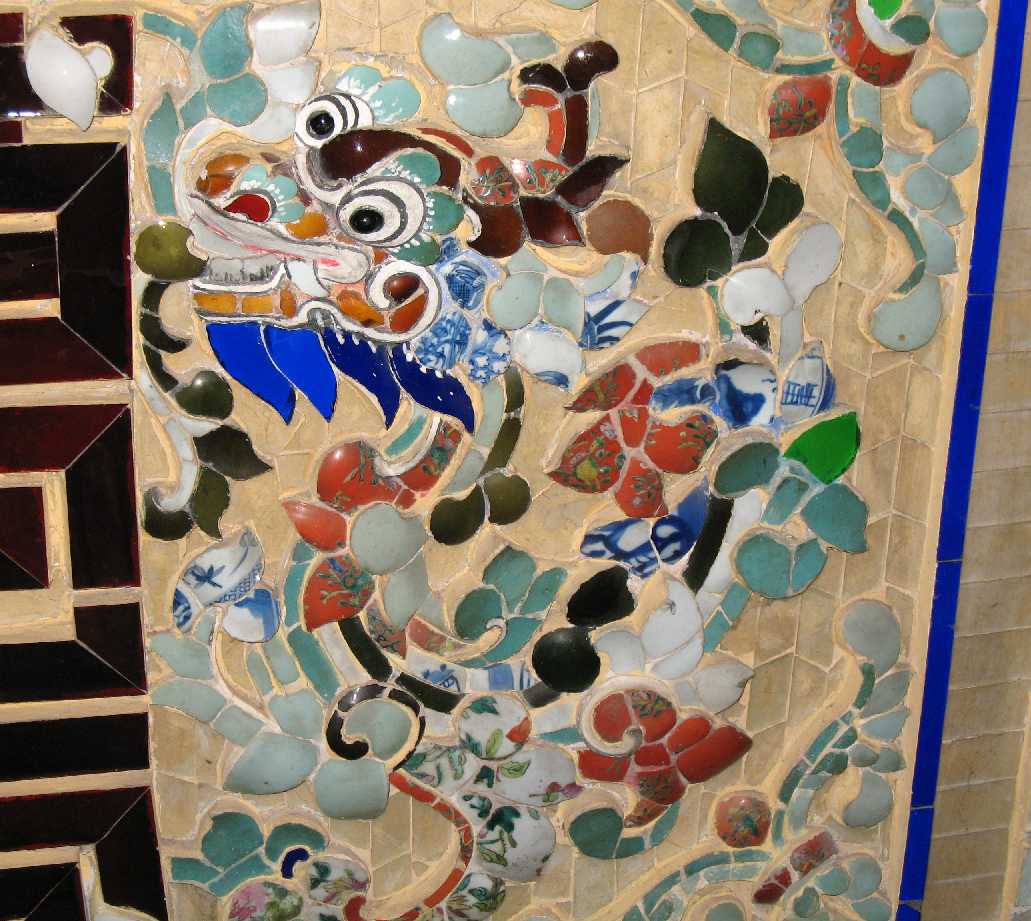
And some detail of the ceramic mosaic:
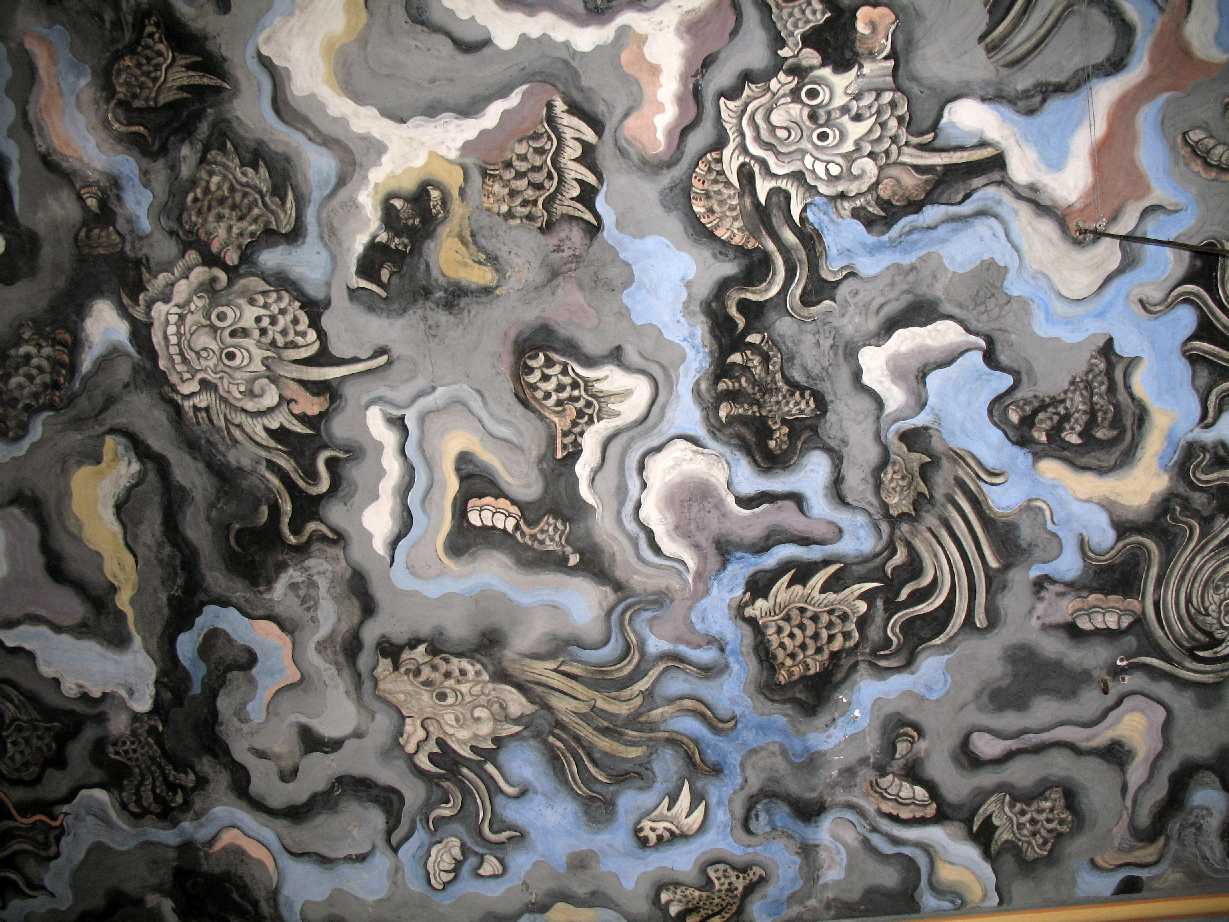
The ceiling has a 1920's European style (Chagall?) with Asian subject matter:
Statues of imperial advisors with elephant and horse:
And a "modest" pathway from the main tomb to a temple:
In the afternoon we took a cruise on the river.

Today we return to Hanoi.

Tomorrow I fly to Thailand.

Monday, December 03, 2007

Some extra photos at Sapa

I am in Hue today but thought I would post some extra photos from the mountain areas.

These are some panoramas I stitched together on the computer:


A pig wandering among the terraced rice paddies:
Tribesmen moving some newly finished furniture down to their village:
A dad walking his little boy down the trail:
A group of red Dzao women resting in town in front of a restaurant:
The women seated in their house....our hosts:

A pig and her children:
Hue will come tomorrow. We visited the ancient Citadel yesterday and will drive out into the countryside to visit some emperors tombs.

Thursday, November 29, 2007

Sapa In the Northwest Mountains near the Chinese Border

Tuesday evening we took the 300 mile overnite train ride from Hanoi up into the northwest mountains to Sapa near the Chinese border.

Sapa is a small town at about 5,000 feet of altitude that is in sight of Fansipan which is the highest moiuntain in South Asia at about 10,300 feet. It is a market center for the local minority hilltribes and now serves as a tourist center for backpackers and trekking in the hills and mountains. It is rather primitive in that it has only one bank and NO ATMs! The temperatures are pleasant during the day and rather chilly at night.
We hired a 4-wheel drive Ford vehicle with leather seats and driver for our explorations into the nearby hills and overnited in a 4-star hotel------not much roughing it for me.

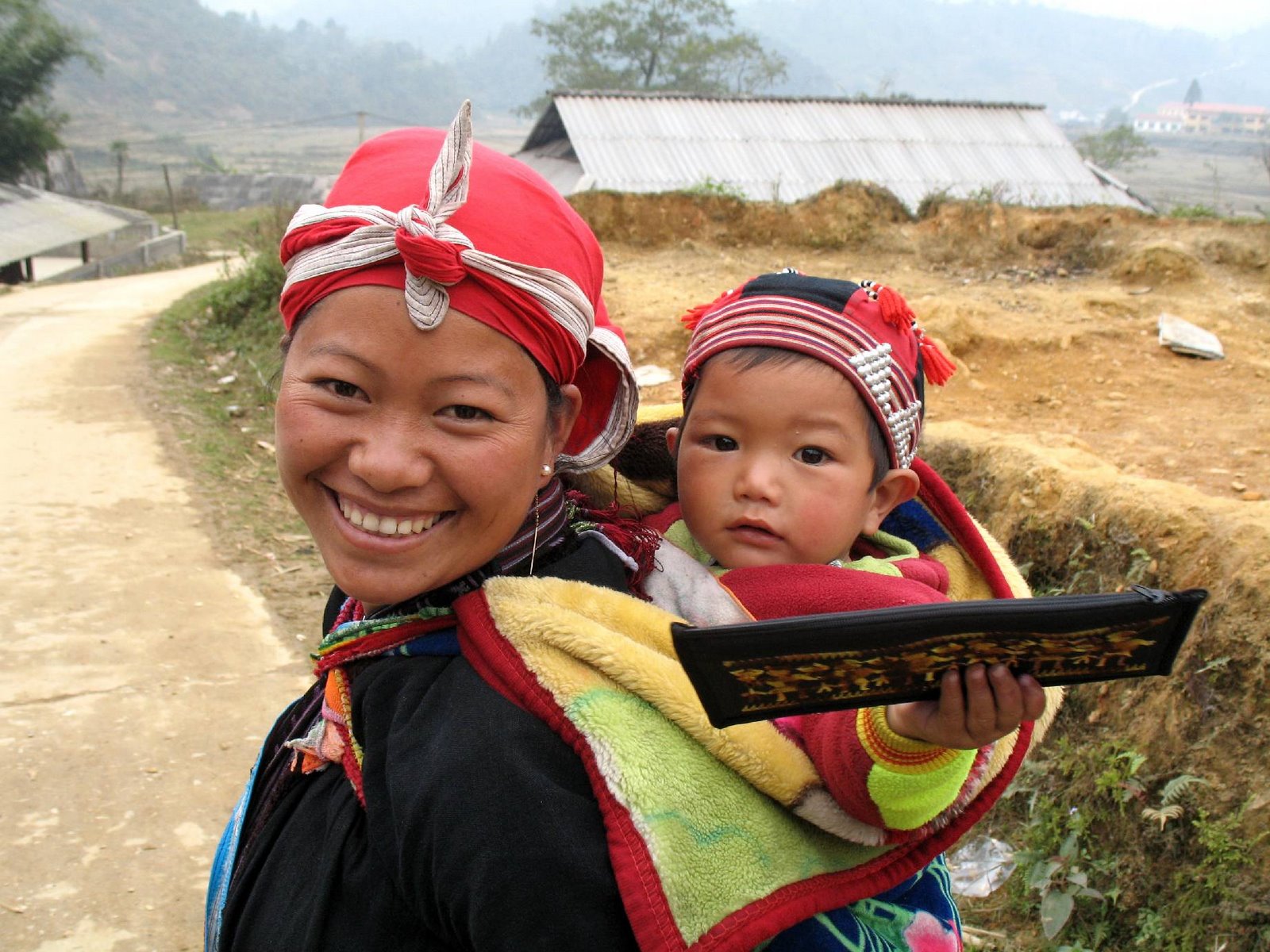
We visited the surrounding countryside which contains multiple villages of minority groups…..mostly Red Dzao and Black H’Mong. By the way, there are 54 minority groups in Vietnam as distinguished by language. The hilltribes have been traditionally difficult to control by the central government and have maintained much of their distinct culture. Their economy is primarily agriculture and selling cultural souvenirs to tourists. They have an astonishing command of English and are very friendly and charming. Their main profitable agricultural plant used to be opium, but since that was outlawed by the government rice is the main crop along with some corn.

On Wednesday afternoon we went to 2 villages named Lao Chai and Ta Van which are situated in a beautiful valley filled with terraced rice fields. The day started foggy when arrived off the train at 630am but was sunny but hazy by the time the afternoon rolled around. We walked down into the valley then along the valley floor for an hour and a half where our driver picked us up. We passed numerous animals such as water buffalo, pigs, & dogs; as well as numerous people from the tribes many of which were dressed in their daily colorful dress.

Some villagers wandering down the trail into the valley:

Water buffalo in the rice terraces:

Me and a new friend:

A young man playing with his knife in the valley:

On Thursday we went to the village called Ta Phin in another valley. We were met by a group of 6 women and their 3 children who walked with us for the next hour politely asking us to buy some souvenirs and joking and questioning us. Their english and understanding the subtleties of teasing and joking was quite amazing and entertaining.

The group of women who followed us from our car invited us into their house:


A couple of photos of some parents with their kids:


Tuesday, November 27, 2007

Halong Bay


120 miles east of Hanoi is bizarre, beautiful Halong Bay. It has over 3,000 limestone pinnacles protruding from the waters of the Tonkin Gulf. These pinnacles are dotted with beaches and caves.
We boarded our small cruise boat at noon Sunday with about 15-20 other people and after spending overnite aboard we debarked the next day at noon. We ate fresh seafood- prawns, crabs, fish for our meals and sat on deck as we floated thru the islands. We stopped at one island to explore a huge cave and at another where some kayaked and others bought fresh seafood for the boat crew to prepare. The weather was very pleasant and the sky was relatively clear.
The Bay was declared a UN World Heritage Area in 1994 in hope to save it from massive tourism and pollution for the future.


A few photos of the Bay:


This a a docking area near a pinnacle with an extensive cave that we, and lots of others, explored:
Remember you can click to enlarge these photos


As the sun set, the beauty of the seascape was even more beautiful:

As is so common in these developing countries in Asia, the influx of tourists causes poor locals to try to sell trinkets, snacks and soft drinks. On Halong Bay thy swarm in small row boats usually accompanied by their children. It is extremely hard to resist these cuties: